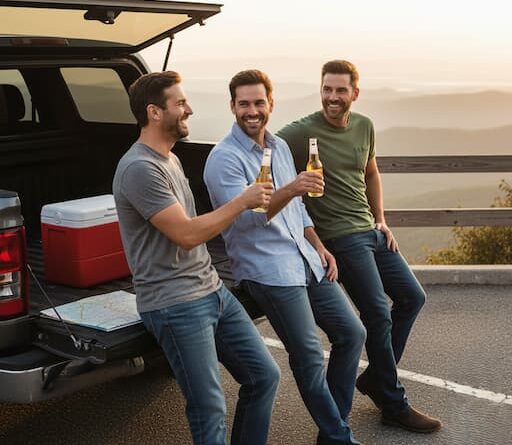



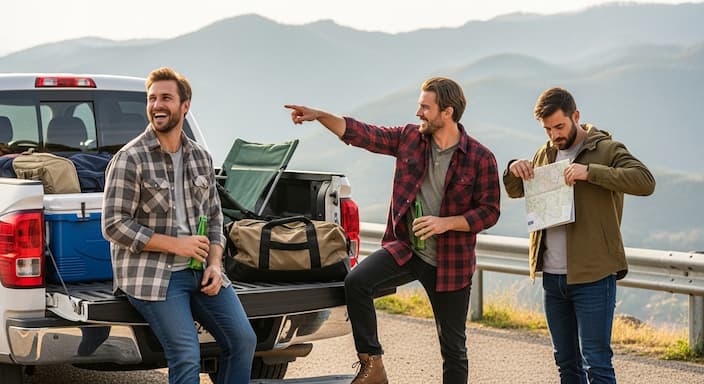
There’s a fine line between being smart with your travel money and being the guy who makes everyone stop at the cheapest motel with the flickering light and the mystery stain on the carpet. I’ve been that guy. And let me tell you, the savings weren’t worth the story. Nobody looks back on a trip and says “man, I’m so glad we saved forty bucks on that place with the broken AC.”
But that doesn’t mean you need to blow the kid’s college fund on a five-star resort where they bring you a cold towel the second you step out of the car. Traveling smart means knowing where to spend, where to save, and when to say “you know what, this one’s on me.” It’s about making sure the trip delivers the memories without leaving you broke when you get back. So whether you’re planning a road trip with the boys, a long weekend with the wife, or a solo mission to chase down the best BBQ in Texas, let’s talk about how to do it right.
The Road Trip: Spend on Wheels, Save on Wheels
If you’re driving, the vehicle is your home base. This is not the place to be cheap. I’m not saying you need to rent a luxury SUV with a cooler in the center console. But if your truck has been making a noise that sounds like a dying walrus for the last three months, get it checked before you hit the highway. A breakdown in the middle of nowhere isn’t an adventure. It’s a disaster. It kills your schedule, kills your mood, and kills your budget when you’re paying a tow truck driver to haul you to the nearest town with one mechanic who knows he’s got you over a barrel.
Check the tires. Change the oil. Make sure the AC works if you’re heading south. These are basics. But guys skip them all the time because they’re “too busy.” Then they spend their vacation sitting on the shoulder of I-40 watching semis blow by at 75 miles an hour. That’s not traveling smart. That’s paying for it later with interest.
Where you can save on the road is in the details. Pack a cooler with drinks and snacks instead of paying gas station prices every time you stop. Bring a gallon of water. Throw in some sandwiches for the first day. That little bit of prep saves you fifty bucks before you even cross the state line. And it keeps you from having to stop every two hours for a bag of beef jerky and a lukewarm soda.
The Lodging Debate: Splurge on Location, Skimp on Extras
Here’s where guys get it backwards. They’ll book a cheap hotel thirty minutes from where they actually want to be, then spend the whole trip driving back and forth, burning gas and losing time. Or they’ll book a place with a pool and a gym and a business center they’ll never use, then eat every meal at chain restaurants because they blew the budget on a room with a soaking tub.
The smart move is to pay for location. If you’re going to a game, get the place within walking distance of the stadium. You’ll pay more for the room, but you’ll save on parking, on Ubers, on the headache of sitting in traffic for an hour after the final whistle. Same goes for a beach trip or a mountain weekend. Being close to what you came to do means you spend less time in the car and more time actually enjoying yourself.
Save on the frills. You don’t need a suite. You don’t need room service. You don’t need a view of the ocean if you’re only going to be in the room to sleep. A clean, safe place with a decent bed and a hot shower is all you really need. Put the extra money toward experiences. That’s what you’ll remember. Not the thread count of the sheets.
Eating Like a Local, Not a Tourist
Nothing kills a trip faster than eating at chain restaurants. You can get Applebee’s at home. You didn’t drive six hours to eat a burger you could have had in your own kitchen. The smart traveler eats where the locals eat. The place with the handwritten menu, the faded sign, and the old guy at the counter who’s been there since 1972. That’s where the good stuff is.
Here’s a trick. When you roll into a new town, ask a bartender where they eat. Not the hotel front desk. Not Yelp. Bartenders know. They know where the food is legit, where the portions are generous, and where you’re not going to pay eighteen bucks for a sandwich because it comes with a side of “vibe.” Follow their lead and you’ll eat better for half the price.
And don’t be afraid to make lunch your big meal. Dinner menus at popular spots are often twice the price for the same food. Hit the famous BBQ joint at 11:30 in the morning. You’ll skip the line, pay less, and have the whole afternoon to walk off the brisket. That’s traveling smart. You get the experience without the markup.
The Buddy Trip: How to Handle the Money Talk
Nothing ruins a guys’ trip faster than the silent tension of who owes who for what. You’ve all been there. One guy covers the rental car, another guy buys the groceries, another guy pays for dinner, and by the end of the weekend nobody knows who’s even or who’s owed. Then you spend the next two weeks sending Venmo requests and pretending it’s not awkward.
Solve it before you leave. One person handles the big stuff, everyone pays them upfront. Or use a shared tab app where everybody throws in and you track expenses in real time. It’s not fun. It’s not manly. But neither is fighting with your best friend over fifty bucks for gas two weeks after the trip. Be adults. Settle the money early so nobody’s thinking about it when they should be thinking about the game or the next beer.
And here’s a rule that’s served me well. If you’re the one who suggested the trip, be ready to cover a little extra. It’s not about being a sugar daddy. It’s about being the guy who makes sure nobody sits out an experience because they’re worried about the cost. If your buddy is stretched thin and you want him there, pick up the tab on dinner one night. Don’t make a thing of it. Just handle it. That’s how you keep the crew together for the next trip.
The Solo Trip: Spending on Safety
Sometimes you need to get away by yourself. No wife, no kids, no buddies. Just you, the road, and a plan that can change on a whim. That’s a beautiful thing. But when you’re rolling solo, the rules change a little. You don’t have anyone to watch your back. So you spend on safety.
Don’t book the sketchy Airbnb just because it’s cheap. Don’t park your truck in an unlit lot because you wanted to save eight bucks. Pay for the well-reviewed place. Pay for secure parking. Keep a paper map in the truck because your phone might lose signal in the middle of nowhere. And for the love of God, tell somebody where you’re going and when you expect to be back. It’s not about being scared. It’s about being smart. Adventure is great. Being stranded is not.
That said, a solo trip is the perfect time to splurge on one thing that matters to you. Maybe it’s a nicer hotel room because you actually want to enjoy the space. Maybe it’s a guided fishing trip instead of trying to figure it out on your own. Maybe it’s the good bottle of whiskey at the end of the day. When you’re not splitting costs, you get to decide what’s worth it. Don’t feel guilty about spending on something that makes the trip memorable. That’s the whole point.
The Gear Question: Pack Smarter, Not Harder
You know what’s not a good use of travel money? Buying stuff you already own because you forgot to pack it. Or worse, buying overpriced gear at the destination because you didn’t plan ahead. A six-pack of sunscreen at the beach town gas station costs triple what it does at home. A rain jacket at the mountain tourist shop is twice the price and half the quality.
Make a list. Pack the day before. Think through what you’re actually going to do. If you’re hiking, bring boots. If you’re sitting in a stadium, bring a cushion and a poncho. If you’re grilling, bring a decent knife from home. The small stuff adds up. And being the guy who’s always running to the store to buy another thing you forgot is a waste of time and money.
But here’s the flip side. Sometimes buying something on the road is the right move. If you find a local shop selling something unique, something you’ll actually use, something that reminds you of the trip, that’s not wasted money. That’s a souvenir that doesn’t suck. The key is knowing the difference between “I need this” and “this is a cool memory.” Spend on the memory. Save on the stuff you could have brought from home.
The Smart Traveler’s Bottom Line
Traveling smart isn’t about being cheap. It’s about being intentional. It’s knowing that a little planning upfront saves you from being the guy who spends his whole trip stressed about money. It’s knowing where to put your dollars so you get the experiences you came for without the regrets afterward.
Spend on the things that matter. The vehicle that gets you there. The location that puts you in the middle of the action. The meal you’ll be talking about for years. The safety that lets you relax. Save on the things that don’t. The upgrades you won’t use. The meals you could eat at home. The gear you already own.
At the end of the day, the goal isn’t to come back with the most money in your pocket. It’s to come back with the best stories. And the best stories usually come from spending a little more where it counts, a little less where it doesn’t, and knowing the difference before you hit the road. So plan smart, pack smart, and when you’re standing at the counter trying to decide if that extra fifteen bucks is worth it, ask yourself one question. Will I remember this? If the answer’s yes, pull out the card. That’s traveling smart.