



I’ve seen it happen more times than I care to admit. A buddy gets back from a road trip with a couple cases of some limited release you can’t find within a hundred miles of home. He’s pumped. He’s got the good stuff. So he sticks it in the garage or shoves it in the back of the pantry and forgets about it for a few months. Then the big game rolls around, he cracks one open with a flourish… and it tastes like wet cardboard and regret.
Don’t let this be you. You wouldn’t throw a prime rib in the trunk of your car for a week and then wonder why it smells funky. Same rules apply here. Beer is alive. It’s a living product, and if you treat it like a can of motor oil, it’s going to turn on you. The good news is storing beer the right way isn’t rocket science. It’s just a few common sense habits that’ll make sure every bottle and can tastes exactly like the brewer intended. Let’s get into it.
The Big Three: Light, Heat, and Time
If you take nothing else away from this, remember these three enemies. They are the reason good beer goes bad. They’re more dangerous than a buddy who says “hold my beer” before trying something stupid.
Light: The Skunk Factory
You know that skunky smell that hits you when someone cracks a clear or green bottle that’s been sitting in the sun? That’s not a “European flavor profile.” That’s a chemical reaction. Ultraviolet light interacts with the hops in beer and creates a compound that’s almost identical to the one skunks spray. Nature’s little joke on hop lovers.
Brown bottles are better than green or clear, but they’re not bulletproof. Cans are the real MVP here. Zero light gets through. That’s why more and more craft brewers are switching to cans. It’s not just about being trendy. It’s about protecting the product. So whether it’s in a bottle or a can, keep your beer in the dark. A fridge with a solid door, a basement, a closet… anywhere the sun doesn’t shine. Sunlight through a window for a few hours? That’s enough to wreck a good IPA. Treat your stash like a vampire and you’ll be fine.
Heat: The Flavor Killer
Heat speeds up every chemical process in beer. That includes the ones you don’t want. The warmer it gets, the faster the beer ages. And aging isn’t always a good thing. Unless you’re cellaring a high-alcohol stout or a sour that’s meant to evolve, heat is just going to make your beer taste stale, sweet, or just plain off.
The magic number is 55 degrees Fahrenheit. That’s the sweet spot for long-term storage. It’s cool but not freezing. A basement or a dedicated beer fridge is perfect. If you don’t have that, just aim for the coolest, most stable spot in your house. What you don’t want is fluctuation. That garage that hits 90 degrees in the afternoon and drops to 60 at night? That’s a death sentence for flavor. The beer goes in and out of temperature zones and the liquid expands and contracts. It’s like putting your six-pack through a stress test it never signed up for.
Time: Not All Beer Ages Like Wine
This is the one that trips guys up. They hear about aging beer and think every bottle in their fridge is going to turn into liquid gold if they just wait long enough. Wrong. Most beer… especially hoppy beer like IPAs and pale ales… is meant to be drank fresh. The hop flavor fades fast. That tropical fruit punch taste you loved on day one turns into a dull, grassy, almost tea-like flavor after a few months.
If you’re holding onto a big imperial stout, a barleywine, or a sour that’s bottle-conditioned… those can improve over a year or two. But for 90% of the beer out there, the best storage advice is simple: drink it. Don’t save it for a “special occasion.” A Tuesday after work is a special enough occasion to enjoy a good beer.
Fridge vs. Shelf: Know the Difference
There’s a lot of debate about whether you should keep beer refrigerated all the time. Here’s the straight truth: cold slows down aging. Period. If you have the fridge space, keep your beer cold. That doesn’t mean you’re a snob. It means you’re smart. A consistent temperature in the 38 to 45 degree range is ideal for most styles. It keeps the carbonation tight, the flavors bright, and the shelf life longer.
If you’re storing beer at room temperature… say, in a closet or a pantry… just make sure it’s stable and cool. Anything over 70 degrees and you’re basically speed-aging the beer. That’s fine if you’re planning to drink it within a couple weeks. Not so fine if it’s sitting there until football season.
One more thing: keep your beer upright. Laying bottles on their side like wine might look cool in a cellar, but it increases the surface area of the beer touching the oxygen trapped in the bottle. That’s a recipe for oxidation. Plus, if it’s a bottle with a cork, the beer can dry out the cork and let air in. Stand ’em up straight. They’ll thank you for it.
The Case for a Dedicated Beer Fridge
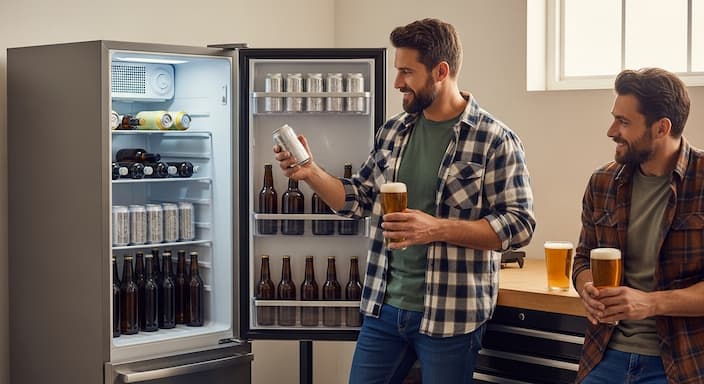
Look, I know not everyone has the space or the budget for a second fridge. But if you’re serious about beer… if you’re the guy who stocks up on seasonal releases or buys cases of your favorite lager when it goes on sale… a dedicated beer fridge is a game changer.
It doesn’t have to be fancy. A basic unit from the hardware store works fine. The key is that it keeps a consistent temperature without the door opening fifty times a day to grab milk or leftovers. Set it to 45 degrees for your everyday drinkers. If you’re storing stuff for the long haul, dial it down to the 50 to 55 range. You’ll have complete control over your inventory, and you’ll never have to play the “how long has this been sitting here?” guessing game again.
Plus, there’s just something satisfying about having your own beer cave. A fridge stocked with cold ones, organized by style, ready to go. It’s the kind of simple luxury that makes a man feel like he’s got his priorities straight.
What About Cans and Bottles? Any Difference?
We touched on this earlier, but it’s worth diving into. Cans are superior for storage. Full stop. They block all light, they seal tighter than most bottle caps, and they cool down faster. The old myth about cans giving beer a metallic taste is just that… a myth. Modern cans have a polymer liner that keeps the beer from ever touching the metal. If you taste metal, it’s the beer, not the can.
Bottles have their place, especially for bigger, bottle-conditioned styles that need a little oxygen to evolve over time. But for your everyday IPAs, lagers, and pilsners? Grab the cans. They stack easier, travel better, and keep the beer fresher longer. That’s a win across the board.
The Bottom Line on Storing Beer
Good beer deserves better than a hot garage or a sunny windowsill. You worked for it. You hunted it down. Maybe you stood in line for it or paid a little extra for something special. The least you can do is give it a fighting chance to taste the way it’s supposed to.
Keep it cool. Keep it dark. Keep it upright. And for the love of all that is hoppy and malty, don’t let it sit around so long that it becomes a science experiment. A well-stored beer is a well-rewarded beer. And when you finally crack it open… whether it’s after a long week or in the middle of a backyard barbecue with the smoker rolling… you’ll taste the difference. That crisp, clean flavor? That’s respect. Respect for the craft, respect for the beer, and respect for your own damn taste buds.