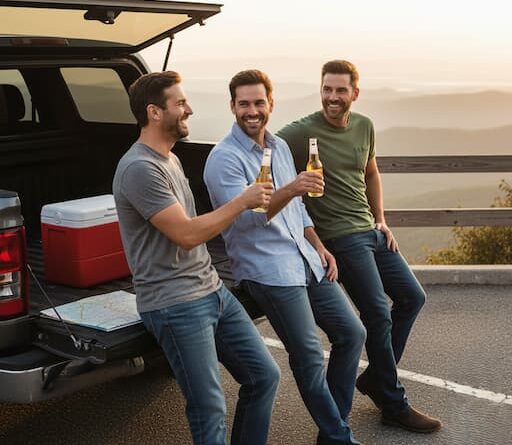



Alright guys, let’s talk about one of the great tragedies of modern travel. No, it’s not the airline losing your luggage, although that’s a close second. I’m talking about the soul crushing, wallet draining, time wasting experience of the tourist trap. You know the places. The restaurants with menus the size of a phone book and pictures of every meal. The “historic” pubs that were built last Tuesday and sell overpriced, watered down beer. The entire city blocks that feel less like a genuine cultural experience and more like a theme park ride where the only thing you get is a lousy t shirt and a sense of profound regret.
We’ve all been there. You follow the crowd, you stand in a line that snakes around the block, you pay twenty bucks for something that tastes like cardboard, and you go home with the same photo a million other suckers have on their phones. It’s the opposite of why we travel. We hit the road to see something real, to have a story that doesn’t involve a pre packaged souvenir keychain. So let’s break down how to ditch the herds and travel like a local who knows where the good stuff is hidden.
The Golden Rule: Walk Five Blocks
This is the simplest, most effective trick in the book. The gravitational pull of a major attraction creates a vortex of mediocrity around it. The closer you are to the Eiffel Tower, the Statue of Liberty, or that giant ball of twine, the worse the food, drinks, and prices will be. Your mission, should you choose to accept it, is to put some distance between you and the epicenter.
Make it a point to walk at least five blocks in any direction away from the main tourist drag. The change is almost immediate. The crowds thin out. The generic chain stores are replaced by a hardware store, a local barber shop, a pharmacy that doesn’t sell “I Heart [City]” shot glasses. This is where you’ll find the real gems. The dive bar with the cheap, cold beer and the regulars watching the game. The family owned BBQ joint with the smoker out back and a line of locals waiting for lunch. These places survive on repeat business, not on catching one time tourists, so the quality is always better. Your wallet and your taste buds will thank you.
Do Your Homework, But Not From a Listicle
I’m not saying don’t research. I’m saying research like a man, not a mouse following the same digital cheese trail as everyone else. Those “Top 10 Must Visit” lists are often paid for or curated by tourism boards. They are designed to funnel everyone to the same ten places.
Instead, get tactical. Go onto forums where locals actually argue about things. Find the subreddit for the city you’re visiting and search for “best burger” or “where to watch the game.” Read the comments. The spots that get consistently praised by people who live there are your targets. Even better, find blogs or YouTube channels dedicated to your specific interests. Looking for the best craft beer scene in Austin? Don’t read a generic travel site, find a blog written by a beer nerd who lives and breathes that stuff. Their passion will lead you to the right taprooms, not the crowded downtown pubs with a hundred taps of fizzy yellow water.
Talk to Humans, Not Just Your Phone
Remember conversation? It’s that thing we used to do before we stared at screens all day. It works wonders when traveling. The bartender at a low key spot is your best intelligence asset. He or she hears everything. After you’ve ordered a beer and been a decent, polite human being, just ask. “Hey, where do you go for a good meal around here when you get off work?”
This one question is pure gold. You’re asking for a local’s personal recommendation, not the place they’re supposed to send tourists. The same goes for your Uber driver, the guy at the bait and tackle shop, the fellow smoking a cigarette outside the hotel. These casual interactions can uncover the hidden Italian restaurant in a strip mall or the lakeside bar that only the townies know about. It takes 30 seconds and can define your entire trip.
Read the Signs, and I Don’t Mean the Billboards
A place tells you what it is if you’re paying attention. Here’s what to look for, and what to run from.
Red Flags (Run Away)
- A menu with more than 50 items. No kitchen on earth can do that many things well. It’s a factory, not a restaurant.
- A guy out front trying to pull you in. Good places don’t need a barker. The food and the atmosphere should be the attraction.
- Pictures of the food on the menu. Just no.
- “We speak English” signs prominently displayed. This is a business that caters exclusively to out of towners.
- Souvenir shops every ten feet. You are in the belly of the beast.
Green Flags (Go Inside)
- A short, handwritten menu on a chalkboard. This means the food is fresh, seasonal, and they actually care about what they’re serving.
- A crowd that sounds local. Listen for accents, or people talking about local sports teams or neighborhood gossip.
- A well worn, slightly dated interior. This is a good thing. It means the place has history and loyal customers. It has character.
- A specific focus. The place is known for its ribs, or its IPAs, or its hot chicken. They do one thing and they do it incredibly well.
Embrace the Detour and the Dive Bar
The best travel stories never start with, “So we were following the itinerary perfectly…” Some of my most memorable nights have been in a dive bar I stumbled into because the “famous” spot across the street had a two hour wait. The best brisket I’ve ever had was from a shack I found after taking a wrong turn on a backroad in Texas.
Leave some room in your schedule for absolutely nothing. Go for a drive with no destination. See a roadside attraction that looks weird. Pop into a local VFW hall or American Legion post if they seem to have a public bar. These are the places filled with characters and stories. You might end up having a beer with a retired fisherman who tells you the real history of the town, or a group of guys who point you to a secret fishing spot. This is the stuff you can’t plan for, and it’s always, always better than the planned alternative.
Think Beyond the City Center
Every major city has cool, self contained neighborhoods that feel like their own small towns. These are often just a short train, bus, or Uber ride from the downtown core, but they are worlds apart. While the downtown is packed with tourists following a map, the neighborhoods are where people live, work, and play.
Do a little research to find these areas. Spend an afternoon and evening there. You’ll find a main street with unique shops, local breweries, and restaurants that are the heartbeat of the community. You get a much more authentic feel for a city by seeing how its residents actually live, not just how it entertains visitors. The vibe is more relaxed, the prices are more reasonable, and the experience is infinitely more genuine.
At the end of the day, avoiding tourist traps is about trusting your gut and seeking out authenticity. It’s about valuing a great story and a genuine connection over a checked box on a sightseeing list. It’s about finding the places that have soul, the spots where the beer is cold, the food is honest, and the people are real. So next time you hit the road, be a traveler, not a tourist. Your liver, your stomach, and your sense of adventure will be forever grateful.