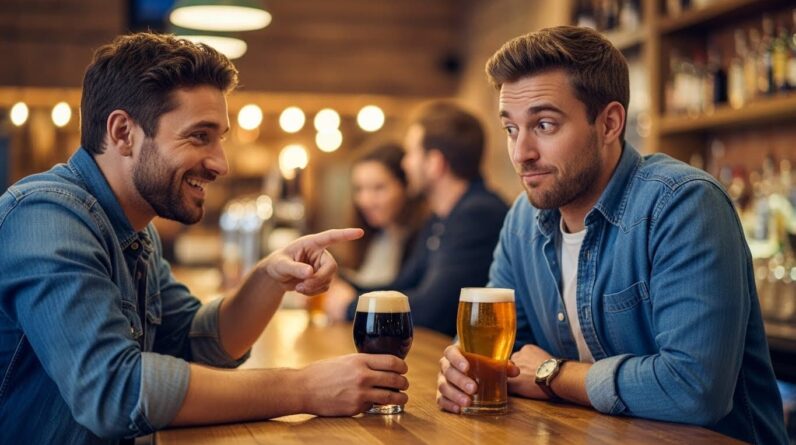




Let’s be real for a second. You’ve been there. You’re standing in front of a cooler packed with more beer options than a chemistry lab, and your eyes lock onto a can that looks like it was designed by a graffiti artist on Red Bull. The name is something like “Unicorn Fart Juicy NEIPA” or “Maple Bacon Coffee Stout.” You grab it because… well, why not? Then you crack it open, take a sip, and immediately regret every life choice that led to that moment.
That’s the world we live in now, fellas. The beer aisle has become a circus. And half the acts are just clowns in fancy costumes. Don’t get me wrong. I love a good craft beer. I’ve had stouts that tasted like heaven in a glass and IPAs that made me want to write poetry. But for every legit masterpiece, there are ten cans of liquid nonsense hiding behind wild ingredients, loud labels, and marketing hype.
So how do you tell the difference between a damn good beer and a gimmick wrapped in aluminum? Pull up a stool. Let’s talk it out.
The Gimmick Playbook: Shiny Cans and Weird Ingredients
Breweries know we’re suckers for novelty. It’s the same reason you’ll try a ghost pepper pizza even though you know it’ll hurt tomorrow. The gimmick playbook has a few classic moves. First up is the “weird ingredient” flex. You’ve seen it. Oysters in a stout. Lobster in a lager. Donut frosting in a sour. Sometimes it works, sure. There’s a brewery in Connecticut that makes a legit oyster stout that’s actually drinkable. But most of the time? It’s a trainwreck. They’re not brewing beer. They’re making a science fair project.
Then you’ve got the “hype beast” cans. You know the ones. Neon colors. Cartoon characters. Holographic foil. The beer inside could be dishwater, but the can is so loud you forget to ask questions. Marketing teams know that half of you will buy a six-pack just to post it on Instagram. And that’s fine if you’re into that. But we’re here to drink, not decorate a dorm room.
Finally, there’s the “limited edition” trap. “Only 500 bottles made!” “Never to be brewed again!” “Aged in whiskey barrels that once held unicorn tears!” Look, scarcity is a hell of a drug. But just because something is rare doesn’t mean it’s good. I’ve had “ultra rare” beers that tasted like someone soaked a pine cone in rubbing alcohol. Don’t let FOMO empty your wallet for a bad pour.
What Actually Makes a Beer “Good”?
Let’s strip away the nonsense. A good beer starts with balance. Not too sweet, not too bitter, not so boozy it feels like a dare. You should be able to taste the ingredients without feeling like you’re being lectured by them. A great pilsner doesn’t need fruit puree to shine. A solid brown ale doesn’t need cocoa nibs to be interesting. The best beers trust the grain, the hops, the yeast, and the water. That’s it. Four humble friends doing the work.
Then there’s drinkability. You know what I mean. It’s that dangerous quality where you look down and your glass is empty and you don’t remember finishing it. A gimmick beer usually fights you. It’s too thick, too sharp, too weird. A good beer invites you to have another. It doesn’t punch you in the mouth. It shakes your hand and asks if you’re staying for the game.
And here’s the big one: does it taste like what it says it is? If a brewery calls it a West Coast IPA, I want pine and citrus and a clean bitter finish. If they call it a Munich Helles, I want soft bread and a crisp snap. Too many gimmick beers hide behind adjectives. “Decadent.” “Lush.” “Explosive.” Just tell me what’s in the glass, pal. I don’t need a poem. I need a beer.
The Editor’s Litmus Test for Gimmick or Good
Over the years, I’ve developed a simple three-question test. Run any suspect beer through this before you buy a whole sixer or a $15 bomber bottle.
1. Would you drink this if the can were plain silver?
Harsh? Maybe. Effective? Absolutely. Strip away the artwork, the witty name, the “backstory” on the label. If you wouldn’t grab it off the shelf when it looks like a generic store brand, then you’re buying marketing, not beer. Be honest with yourself.
2. Does the weird ingredient actually improve the beer?
I’m not anti-experimentation. I’ve had a habanero pale ale that was brilliant because the heat built slowly and worked with the citrus. But most weird stuff is just weird for the sake of being weird. Ask yourself: does this beer need marshmallows, or is the brewer just bored?
3. Could you finish two of these in a row?
This is the drinkability check. A good beer leaves you wanting more. A gimmick beer leaves you wanting a different beer. If you can’t imagine crushing two back to back while flipping burgers or watching the fourth quarter, put it back. Life’s too short for “interesting” beers you have to power through.
The Gimmicks That Actually Work (Sometimes)
I’m not a total grump. I’ll admit there are times when a gimmick pays off. Barrel-aging was once a gimmick. Now it’s a legitimate craft beer pillar. Pastry stouts got ridiculous for a while, but a few breweries figured out how to use lactose and vanilla as supporting actors instead of lead singers. Even the hazy IPA craze… look, I was skeptical. But a well-made hazy with the right hop profile and a soft mouthfeel is a thing of beauty. The problem isn’t the idea. The problem is the 500 copycats who saw it worked once and decided to drown every batch in unfermented fruit puree.
Here’s the cheat code: if the brewer can explain why they added something without using the word “crazy” or “wild,” you might be onto something. If they just shrug and say “we wanted to try it,” run.
How to Spot a Real Deal Brewery
The best breweries don’t chase gimmicks. They chase consistency. Look for a place that makes a killer flagship beer. I’m talking about the lager or pale ale they’ve been brewing for ten years. That’s the canary in the coal mine. If their core lineup is solid, they’ve earned the right to get weird once in a while. But if a brewery only releases “special” beers and never a plain old pilsner? That’s a red flag the size of a billboard.
Also, pay attention to how they talk. Real brewers talk about fermentation temps, hop schedules, and water chemistry. Gimmick brewers talk about “vibes,” “limited drops,” and “collabs” with hot sauce companies. One group is making beer. The other is making content.
The Bottom Line (And Your Wallet)
Here’s where I land. Good beer respects your time, your taste buds, and your money. Gimmicks respect none of those things. They’re counting on your curiosity to outrun your common sense. And hey, we’ve all been there. I’ve bought a peanut butter and jelly sour before. I’m not proud of it. But I learned my lesson.
Next time you’re staring down a beer with a label that looks like a laser light show, take a breath. Ask the three questions. Remember that some of the best beers in the world come in plain brown bottles with simple names. There’s nothing wrong with trying something new. Just don’t let the shiny wrapper convince you that a bad beer is an adventure.
Drink good stuff. Leave the gimmicks for the guys who care more about Instagram likes than the last sip. You’ve got better things to do. Like grilling a steak. Or not missing that field goal. Or just enjoying a cold one that tastes exactly the way it should. No fireworks. No nonsense. Just beer.9