


Let’s be honest. A random Tuesday night game between two mediocre teams you don’t care about is just background noise. You might have it on, but you’re scrolling on your phone, maybe paying attention to the score. But then… you see it on the schedule. That game. The one against them. Your whole week changes. The smack talk starts on Monday. Your blood pressure ticks up a little on Saturday. That’s the power of a real rivalry. It’s the spice in the sports stew, the ghost pepper sauce on the wings. Without it, everything is just bland, forgettable mush. Here’s the straight truth on why rivalries aren’t just fun, they’re absolutely essential. They make sports matter.
It Gives You a Real Enemy (And That’s a Good Thing)
In our polite, sanitized, everyone-gets-a-trophy modern world, we’ve lost something. We’ve lost the clean, healthy outlet of having a sanctioned enemy for three hours on a Sunday. A sports rivalry gives you that. It’s not a personal hatred, at least it shouldn’t be. It’s a tribal banner. It’s my city versus your city. My colors versus your colors. My decades of heartbreak versus your obnoxious recent success.
This is a good and natural thing. It creates identity. You are not just a fan of a team, you are a soldier in a long, storied war against a specific foe. Yankees vs. Red Sox. Cowboys vs. Eagles. Michigan vs. Ohio State. These aren’t just games, they are chapters in a never ending book. Having that enemy focuses your passion, gives your cheers and your groans a specific target. Beating a random team feels nice. Beating them? That’s a season defining victory, no matter what the records say.
It Creates Stories That Last Generations
Statistics are for nerds and fantasy leagues. What we remember are the stories. And the best stories need a great villain. Rivalries provide the narrative engine. Think about it. The Immaculate Reception… that was Steelers vs. Raiders, a brutal AFC rivalry. The Drive by Elway… that was against the Browns. The Celtics and Lakers in the 80s wasn’t just about basketball, it was about Magic and Bird, about East Coast grit versus West Coast cool.
These moments become folklore because of who they happened against. They get passed down from father to son, from old timer to new fan at the bar. “I was there when we finally beat those guys in overtime.” That story has weight because of the history, the past losses, the built up frustration. A great rivalry turns athletes into legends and games into myths. It’s the difference between a fact and a campfire story.
It Forces Everyone to Bring Their Absolute Best
Players can get up for any game, sure. Professionals are professionals. But you can see the difference in a rivalry game. The intensity is turned to eleven. The hits are a little harder. The effort on a loose ball is a little more desperate. Why? Because pride is on the line. No player wants to be the guy who let them win. No one wants to face their fans, or their teammates, after a lazy performance in that game.
This is where ordinary players can become heroes for a day. This is where you see what a guy is really made of. The pressure is different. It’s not just playoff implications, it’s about legacy within the feud. It strips away all the corporate nonsense and the clichés and leaves pure, raw competition. As fans, that’s all we’re really asking for. Give us your best. And a rivalry guarantees we’ll get it from both sides.
It’s the Ultimate Social Glue
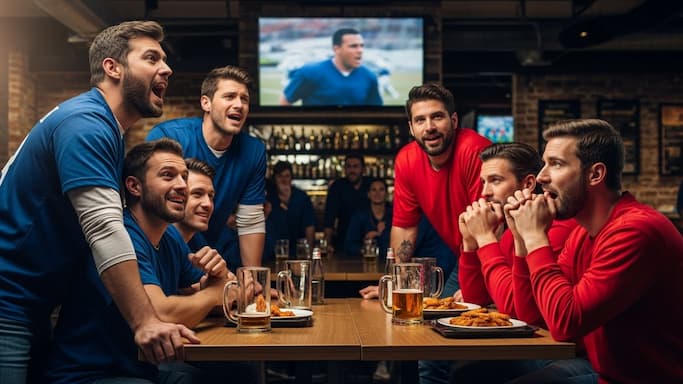
Rivalries build community. They give you an instant connection with a perfect stranger wearing the same colors. It also gives you a hilariously hostile connection with your buddy who, for some tragic reason, roots for the other guys. Your group text explodes. The trash talk at the backyard barbecue has actual stakes. You make bets that involve wearing embarrassing gear or buying rounds of drinks.
This is the fabric of sports fandom. It’s shared misery and collective joy. It’s arguing over a bad call for years. It’s the thing you talk about with your dad. That shared history, that common enemy, bonds people together tighter than just “liking a team.” You’re part of a struggle. And there’s nothing better than sharing a win, or mourning a loss, with people who get it just as deeply as you do.
The Beauty of the Built-In Measuring Stick
In a long season, games can blur together. A rivalry game is a lighthouse. It’s a fixed point you can use to measure your team’s heart, its progress, its soul. Beating a rival can salvage a terrible season. I’ve seen teams with losing records celebrate like they won the Super Bowl because they finally took down their nemesis. Conversely, having a great season but losing to your archrival… that leaves a stain. It feels incomplete.
That game is the true test. It cuts through the stats and the analyst talk. It answers the simple, ancient question: who’s tougher? Who wants it more? When the uniforms are stripped away and the history fills the stadium, who blinks? That’s a question worth asking every single year.
What Makes a Rivalry Real (And What Kills It)
Not every matchup they try to sell us as a “rivalry” is real. The league offices love to create “rivalry week” nonsense, trying to force a narrative where none exists. That’s fake. A real rivalry can’t be manufactured. It needs three things: history, proximity, and stakes.
History means memorable games, controversial moments, and often, shared pain. Proximity matters. It’s way more fun to hate a team whose fans you actually have to live and work around. And stakes… the games have to mean something more than just a check in the win column more often than not. They have to decide division titles, playoff spots, or just plain old bragging rights that last 365 days.
What kills a rivalry? One team becoming permanently pathetic. If one side never wins, the tension dies. It’s not fun to hate a loser forever, it just gets sad. A good rivalry needs balance, a back and forth, a sense that either side could win on any given day. That uncertainty is the fuel.
The Bottom Line
Sports, at their core, are a substitute for war. A healthy, safe, entertaining outlet for our competitive spirits and tribal instincts. Rivalries are what keep that core alive. They inject meaning into the meaningless grind of a long season. They give us heroes and villains, stories to tell, and reasons to care deeply about a simple game.
So here’s to the hated rivals. Here’s to the obnoxious fans in the other jerseys. Here’s to the heartbreak they’ve caused and the sweeter victories they’ve made possible. Without them, sports are just a bunch of people running around. With them, it’s a passion, a tradition, and one of the few truly great things we have left. Now, if you’ll excuse me, I need to go tell my friend who likes the Cowboys exactly what I think of their offseason. Some duties never end.