



Let’s talk about something that’s been getting shoved to the sidelines lately. It’s not a player stat or a new analytics model. It’s bigger than that. I’m talking about tradition. That word gets thrown around a lot, sometimes by guys who just hate change of any kind. But in sports, tradition isn’t just some dusty old relic. It’s the soul of the game. It’s the reason a 3rd and long in a packed stadium feels different than a 3rd and long in your buddy’s basement. It’s the glue that holds the chaos together, the story that makes the score matter. And right now, it feels like we’re in a tug-of-war between honoring that soul and selling it for parts to the highest bidder.
The Foundation: More Than Just Old Habits
First, let’s define our terms. Tradition in sports isn’t just doing something because that’s how granddad did it. That’s a good way to end up with terrible offensive schemes and leather helmets. Real tradition is the shared code. It’s the unwritten rules, the rituals, the landmarks that give the whole spectacle meaning.
Think about it. The seventh inning stretch. The green jacket at The Masters. The Lambeau Leap. The singing of “Sweet Caroline” in the eighth at Fenway. These aren’t just cute things fans do. They are the heartbeat. They transform a crowd of strangers into a temporary tribe. You can be sitting next to a guy you have absolutely nothing in common with, but when the whole stadium stands up to sing “Take Me Out to the Ballgame,” you’re brothers for three minutes. That’s powerful. That’s the magic money can’t buy, though God knows the suits keep trying.
The Anchor in a Storm of Change
Sports change faster than ever now. Players jump teams every year. Conferences reshuffle like a deck of cards. The uniforms have more ads than a NASCAR. We’ve got streaming services, betting lines flashing on screen, and constant noise. It can feel disorienting, like the game you loved is being repackaged and sold back to you in a million little pieces.
Tradition is the anchor in that storm. It’s the constant. When you walk into Wrigley Field, you see the ivy. It’s the same ivy. When Michigan and Ohio State line up, it’s the same hatred, passed down through generations. That continuity matters. It connects you to your dad, to your younger self, to every fan who ever cheered in that stadium before you. It tells you that while the faces and the business change, the essence of the thing remains. Without that anchor, sports become just another form of disposable entertainment, a reality show with uniforms. And we’ve got enough of those.
The Guardrails of the Game
Here’s where tradition gets practical. It sets the guardrails for what’s acceptable, for what respect looks like. Some of these are simple, like not showing up an opponent with excessive celebration when you’re up by 40 points. Some run deeper. It’s the tradition of shaking hands after a brutal playoff series. It’s the rookie carrying the veteran’s pads. It’s the hockey player tapping his goalie after a great save.
These aren’t rules in a rulebook. They’re traditions of respect. They acknowledge that the game is bigger than any one player, any one moment. They separate sports from a street fight. When you see a player ignore these traditions, when they put themselves above the game, it feels wrong. It grates on you. That feeling, that gut check, that’s tradition working. It’s the conscience of the competition.
When Tradition Gets Stupid
Now, let’s be fair. Not all tradition is sacred. Some of it is just plain dumb, and clinging to it makes you look like a stubborn mule. Tradition shouldn’t be an excuse to avoid progress that actually makes the game better or safer.
Resisting instant replay because “the human element is part of the game” is a terrible tradition. Getting the call right is a better tradition. Opposing the NHL banning brutal, career-ending hits because “it’s always been a physical game” is garbage. Player safety should always trump “the way it’s always been.” Tradition that protects incompetence or danger isn’t tradition. It’s a bad habit wearing a nostalgic mask. The key is knowing the difference between a cornerstone and a crutch.
The Battle for the Soul
This is the real fight happening right now. On one side you’ve got the traditionalists, the guys who feel the soul of the game slipping away. On the other, you’ve got the modernizers, the spreadsheet guys who see dollar signs and global markets. The truth is, we need a little of both, but the balance is way off.
When you put a corporate logo where the team name should be, you chip away at tradition. When you move a historic franchise to a new city for a better stadium deal, you sever tradition. When you create a playoff system that makes historic rivalries meaningless, you dilute tradition. The bean counters see these as business decisions. Fans feel them as tiny betrayals. Each one might make “business sense,” but together, they risk turning something we love into something we merely consume.
Keeping the Flame Alive (It’s On You)
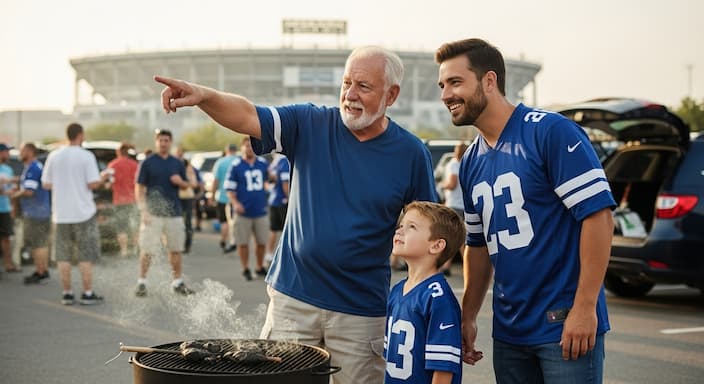
So what’s a regular guy supposed to do? You can’t stop conference realignment. You can’t peel the ads off the uniforms. But you can be the keeper of the flame. Teach your kid why the Yankees-Red Sox rivalry means something. Explain the story behind the Army-Navy game. Keep your own game day rituals, whether it’s wearing a lucky hat or firing up the smoker at 7 AM for a tailgate.
Celebrate the traditions that are left. Sing the fight song loud. Participate in the silly crowd chants. Pass the stories down. That stuff matters. It’s a form of resistance. It’s a way of saying that the experience, the shared history, the feeling in the stadium, is worth more than the optimized profit margin of a television deal.
The Final Whistle
In the end, sports without tradition are just athletic competitions. Impressive, sure, but empty. The tradition is what fills the stadium with something more than noise. It’s what turns a game into an event, a player into a legend, a fan into part of a legacy. It’s the history you can feel. So the next time you’re watching a game and you feel that chill, that connection to something bigger, tip your hat to tradition. It’s the silent partner in every great sports moment, the foundation under all the flash. And it’s our job to make sure the guys in the boardrooms remember that some things are worth more than what’s on the bottom line.