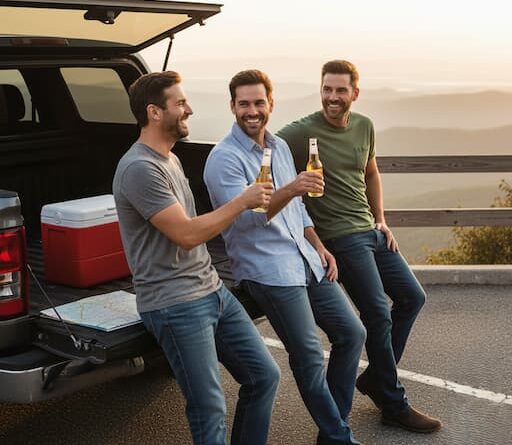



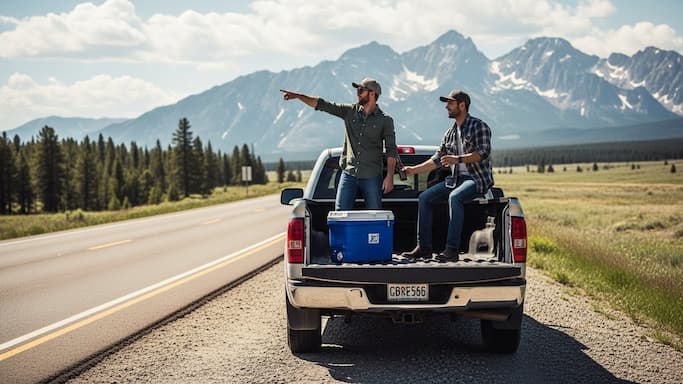
We’ve all been there. You’re ready for a break, a little adventure. So you decide to plan a trip. Three hours later, you’re staring at a spreadsheet comparing 47 different hotels, you have 12 tabs open for “best undiscovered cafes,” and you’re trying to decide if a 3:17 PM tour of the historical district is better than the 4:45 PM one. You haven’t even packed a sock, and you’re already exhausted. The fun has been meticulously planned right out of it.
Here’s the truth, fellas. The best trips, the ones you actually remember, aren’t built on a minute-by-minute itinerary. They’re built on a rough idea and the guts to follow it. Overplanning is the enemy of discovery. It turns what should be an escape into a second job where you’re the stressed-out project manager. So let’s talk about how to travel like a man, not a personal assistant. Let’s talk about how to get out there without turning it into a military operation.
The Foundation: Lock Down the Two Big Things, Then Relax
You need a little structure, or you’ll end up sleeping in your car. But you only need a little. For any trip, just get two things sorted at the start. One, how you’re getting there. Two, where you’re laying your head at night. That’s it.
Book the flight, reserve the rental truck, or map out the driving route. Then, book a place to stay for at least the first night or two. Pick a spot that seems decent and is in a general area you want to be. Don’t agonize. “This hotel has a 4.3 rating and is near the historic district, good enough.” Click buy. The goal is to eliminate the two things that cause real panic: being stranded without transport and being homeless in a strange city. Once those are handled, the pressure is off. Everything else is optional.
Ditch the Itinerary, Adopt the “Anchor Point”
Instead of a schedule, think in terms of anchor points. These are one or two things per day you’d genuinely like to do or see. That’s your loose goal.
How It Works in the Real World
Say you’re in Nashville. Your anchor point for Tuesday might be: “Check out the Country Music Hall of Fame.” That’s it. You don’t plan what time you’ll go. You wake up, get some coffee, and when you feel like it, you amble over there. Maybe you go at 10 AM. Maybe you decide to hit a cool-looking BBQ joint for lunch first and go at 2 PM. It doesn’t matter. The anchor point gave you a direction, not a deadline. After you’re done, you’re free. You might wander down the street, see a live band spilling out of a bar, and decide to post up for the afternoon. That’s the magic. The unplanned stuff becomes the story.
Talk to Humans, Not Just Your Phone
Your phone is a great tool for maps and reviews. It’s a terrible substitute for a conversation. The single best source for what to do, where to eat, and what to see is a local who isn’t trying to sell you something.
When you check into your hotel or Airbnb, ask the person at the desk or your host a simple question. “Hey, if you had one afternoon off, where would you go grab a great burger and a beer around here?” You’ll get a better, more honest answer than any top-ten list online. Ask the bartender. Ask the guy at the gas station. These quick chats will point you to the hidden gem diner, the dive bar with the amazing jukebox, or the scenic overlook that isn’t crowded with tourists. This is how you find the real soul of a place.
Pack Light, Pack Right: The Go-Bag Mentality
Overpacking is the physical manifestation of overplanning. You’re carrying all your “what if” anxiety on your back. Do you really need three different pairs of shoes for a three-day trip? No.
Adopt the go-bag mentality. If you can’t carry it comfortably from your truck to the check-in counter in one trip, you have too much. Stick to versatile clothes that can mix and match. Roll your clothes, don’t fold them, you’ll fit more. And for the love of all that is holy, leave the giant toiletries at home. You can buy shampoo anywhere if you run out. A lighter bag means you’re more mobile, more flexible, and you spend less time unpacking and repacking. It’s freedom.
Embrace the Detour (Literally)
This is the golden rule of travel without overplanning. When you see something interesting, pull over. That weird roadside attraction, the little town with the promising looking steakhouse, the scenic route that adds an extra hour… take it.
The GPS is a suggestion, not a command. Some of my best travel memories came from ignoring the “recalculating” lady and following a hunch. The goal of the trip isn’t to efficiently move your body from Point A to Point B. The goal is to have an experience. The detour, the unplanned stop, the accidental discovery, that’s where the experience lives. It’s the difference between seeing a place and just passing through it.
The Food Strategy: Follow Your Nose, Not the Crowd
Don’t spend your trip eating at chain restaurants you have at home, but also don’t feel obligated to get a reservation six weeks out at some trendy spot full of food critics. Use a simple two-step system.
First, use your eyes and nose. When you’re walking around, look for a place that’s busy but not packed with people who look like they’re on a guided tour. If you smell smoke and meat, follow it. Second, ask one of those locals we talked about. “Where do you go for breakfast?” is a perfect question.
Sometimes you’ll win big and find an incredible spot. Sometimes you’ll get a mediocre meal. That’s okay. It’s part of the adventure. A bad meal makes for a better story than a perfectly planned, forgettable one.
The Wrap Up: Travel is an Attitude, Not an Itinerary
At the end of the day, the goal is to come home refreshed, with a few good stories, and maybe a cooler full of local beer you can’t get back home. You won’t achieve that by color-coding a daily agenda.
Travel without overplanning is about trading control for curiosity. It’s about having the confidence to know that as long as you have a place to sleep and a way to get around, you’ll figure it out. It’s about leaving room for the trip to happen to you, instead of you forcing yourself upon the trip. So book the basics, pack your bag, and then hit the road with your eyes open and your schedule clear. The best parts are always waiting where you didn’t think to look.