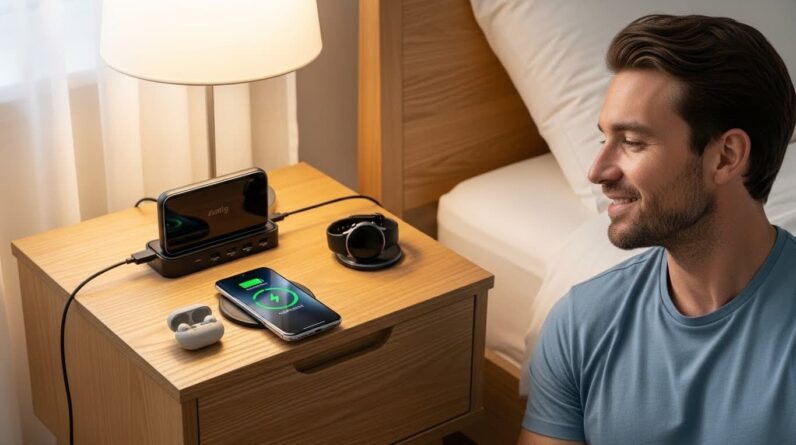




Hey everyone. Grab a cold one and pull up a chair. Let’s talk about the word “smart.” It’s slapped on everything these days. Smartphones, smart TVs, smart fridges, smart toilets… no, really, smart toilets. We’re told these gadgets will streamline our lives, make us more efficient, and basically turn our homes into the Starship Enterprise. But I gotta ask… does any of it actually make life better, or are we just paying extra to be frustrated by a light bulb that needs a software update? I’m here to make the case that in the race to make everything “smart,” we’ve forgotten what makes things good. Sometimes, a dumb tool that just works is the smartest choice you can make.
The Tyranny of the Touchscreen
Let’s start with the most obvious offender. Remember buttons? Beautiful, tactile, satisfying buttons. You pushed one, something happened. End of story. Now, my car’s climate control is buried three menus deep on a glossy screen that gets covered in fingerprints. Want to turn up the heat? Don’t you dare take your eyes off the road to find the virtual slider. This isn’t progress. This is change for the sake of change, designed by a guy in a lab coat who never had to defrost his windshield while driving in a snowstorm. A smart interface that makes a simple task complicated is a failure, no matter how sleek it looks. Give me a knob for volume and a button for power any day of the week. My muscle memory works faster than any app.
Your House Doesn’t Need an Operating System
The Light Bulb That Broke the Camel’s Back
I bought into the smart home thing early. I got the wifi light bulbs. It was cool for a week. “Hey phone, turn the living room blue.” Neat party trick. Then the internet went out. My lights became expensive, paperweight sculptures. I had to physically unscrew them to reset them. A regular light bulb costs two bucks and works 100% of the time with a switch my grandma could use. The smart bulb costs twenty five bucks, requires an app, a hub, a stable wifi connection, and periodic updates to fix security flaws that might let a hacker… blink my lights menacingly? The juice isn’t worth the squeeze. The goal of a light is illumination, not becoming a node in your overly complicated home network.
The Talking Kitchen Appliance
The smart fridge is the poster child for this nonsense. A fridge has one job. Keep food cold. Now, for three times the price, you can get one with a screen that shows you the weather, plays Spotify, and lets you see inside via a camera. But here’s the kicker… you have to be standing in front of it to use the screen. The same place your phone, which already does all that stuff better, is in your pocket. It’s a solution desperately searching for a problem. I don’t need my mayonnaise to send me a text. I just need my beer to be cold and my butter not to melt.
The Subscription Apocalypse
This is where “smart” truly reveals its dark side. It’s not about selling you a product anymore. It’s about locking you into a forever monthly fee. You buy a smart fitness tracker. To get the “full analytics,” you need the premium app subscription. You buy a smart lawn mower or a coffee maker. Want the fancy features you saw in the ad? That’ll be $9.99 a month, forever. They’re turning hardware into a rental service. Your grandpa bought a wrench and owned it for life. We’re buying gadgets that become useless if we stop paying the digital rent. That’s not smart for your wallet. That’s just a trap.
Complexity vs. Reliability
Engineering 101 tells us a simple system fails less than a complex one. Every new “smart” feature is another line of code, another sensor, another potential point of failure. My old charcoal grill has zero moving parts. It will work in 50 years. A smart pellet grill with digital temperature control, wifi connectivity, and an automatic auger is a marvel… until the circuit board gets fried by a rainstorm or the app won’t connect. Now you’ve got a $1200 doorstop and hungry guests. For mission critical things, reliability isn’t just a feature, it’s the only feature. Sometimes, low tech is high reliability, and that’s a trade off worth making.
The Privacy You’re Giving Away
Let’s get serious for a minute. That cute little smart speaker listening for its “wake word?” It’s listening. That smart TV with voice control? It’s collecting data. Your wifi connected thermostat knows when you’re home and when you’re not. We’re filling our homes with microphones and cameras connected to the internet, built by companies whose entire business model is harvesting and selling data. You’re trading a sliver of convenience for a giant chunk of your privacy. A dumb speaker is a Bluetooth speaker. It plays music. It doesn’t send a transcript of your living room conversations to a server farm. That’s a feature, not a bug.
Where Smart Tech Actually Makes Sense
Alright, I’m not a total Luddite. There are places where a computer chip in your gear is a game changer. The key is utility that outweighs the hassle.
Streaming sticks and boxes are a win. They turn any dumb TV into a portal for movies, sports, and shows. The value is clear and immediate. Smart thermostats, if you actually program them, can save real money on your energy bill by learning your schedule. That’s a tangible return on investment. And my phone… well, it’s a camera, map, library, and communication device in my pocket. It earns its complexity.
The rule of thumb? If the “smart” function solves a real problem you actually have, go for it. If it just invents a new problem so it can sell you the solution, walk away.
The Final Verdict
We’ve been sold a future of convenience, but we bought a present of complication. Before you drop cash on the next smart gadget, ask yourself the simple questions. Does this solve a problem, or create one? Will it work when the internet is down? Am I buying a product, or a subscription? And most importantly… will this thing still just do its basic job in five years, or will it be an obsolete brick because the company stopped supporting the app?
Don’t get me wrong. I love tech when it works. But I love things that work more. There’s a quiet dignity in a tool that performs its function perfectly, without drama, without updates, and without needing to know my wifi password. Sometimes, the smartest move is to keep it simple. Now, if you’ll excuse me, I’m going to cook some steaks on my idiot proof gas grill and listen to the game on a plain old FM radio. It never buffers.