



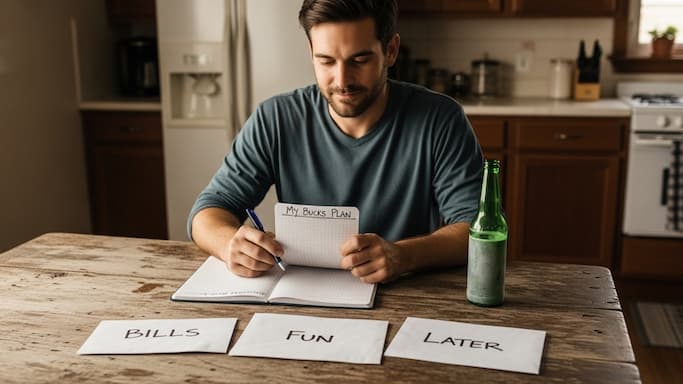
The word “budget” feels like a punishment, doesn’t it. It sounds like something a guy in a too-tight suit would lecture you about. It brings to mind spreadsheets, saying “no” to everything fun, and living on a diet of rice and beans so you can save for a retirement that feels a million years away. Forget that. We’re not doing that. We’re having a real talk about money, the same way we’d talk about fixing a carburetor or why your brisket is dry. This isn’t about restriction. It’s about control. It’s about knowing where your cash goes so you can have more of it for the good stuff… beer, BBQ, maybe a little something for the lady in your life, and a future that doesn’t involve asking your kids for gas money.
The Buddy System for Your Bucks
Think of your money like a crew of buddies on a Friday night. Without a plan, it’s chaos. One guy (Rent) is responsible and already there holding the table. Another (Groceries) is reliable, he’ll show up. But then you’ve got the wild ones… Impulse Online Purchase Guy, Fancy Craft Beer Guy, and “One More Round” Guy. They roll in and blow the whole night’s plan in an hour. A budget isn’t a prison warden. It’s you, as the group’s logical friend, saying “Alright fellas, here’s the plan. We cover the important stuff first, we save a little for later, and then we can cut loose with what’s left without waking up with a financial hangover.” You’re just giving every dollar a simple job before it gets drunk and disappears.
Step One: The Brutal, One-Time Honesty Session
You gotta know where you stand. This means for one normal month, you track every single dollar. And I mean every one. Not just the big rent check. The coffee, the gas station snacks, the app subscriptions you forgot about, the Venmo for your buddy’s share of the wings. Don’t use some fancy app if you don’t want to. Just take a picture of every receipt or write it in the notes app on your phone. At the end of the month, you won’t be looking at numbers. You’ll be looking at a story. And it might be a story where the main character spends $87 a month on energy drinks. That’s okay. You can’t fix what you don’t see.
Step Two: The Three-Bucket Breakdown
Now, take your total monthly take-home pay (that’s what actually hits your bank account). We’re splitting it into three buckets. This is the “50/30/20” rule for guys who hate rules. Just think of it as a guideline.
Bucket One: The Gotta-Do-Its (About 50%). This is non-negotiable. Rent or mortgage, utilities, groceries, car payment, insurance, gas to get to work, minimum debt payments. The boring, adult stuff that keeps the lights on and the repo man away.
Bucket Two: The Wanna-Do-Its (About 30%). This is your fun money and your life money. Beers with the boys, date night, new tools, streaming services, hobbies, that nicer cut of meat for the smoker. This also includes things like clothes or a haircut… stuff you need but can control the cost on.
Bucket Three: The Later-Do-Its (About 20%). This is your future self’s beer money. It goes to building an emergency fund (more on that in a second), paying off debt faster, and investing. This bucket is what turns you from a guy who just gets by into a guy who has options.
The “Oh Crap” Fund: Your Financial Fire Extinguisher
This is the single most important part of a budget for a normal guy. Before you try to invest in crypto or buy a boat, you need an emergency fund. Life will throw a punch at your wallet. The transmission goes, the water heater dies, you get a surprise dental bill. Without a cushion, you go right into debt. That’s the cycle that keeps guys broke.
Your first target is $1,000. Just a grand, sitting in a boring savings account you don’t touch. That’s your “Oh Crap” Fund. It turns a disaster into an inconvenience. Once you have that, you build it up to cover 3 to 6 months of those “Gotta-Do-It” expenses. This isn’t glamorous. It won’t impress anyone at the bar. But the peace of mind it gives you? Priceless. You can look your boss in the eye. You can handle a curveball. That’s real freedom.
Making It Stick: Tactics That Don’t Suck
All this theory is fine, but how do you actually do it without losing your mind.
The Cash Envelope Trick for Problem Areas
If you blow your “Wanna-Do-It” money online or at the bar without thinking, go physical. When you get paid, take out the cash for your “Fun Money” and “Groceries” categories. Put them in actual envelopes. When the cash in the “Fun” envelope is gone, you’re done until next payday. You can’t overspend digital money without feeling it. You feel it real quick when you’re holding air. It’s a psychological hack that works.
The 24-Hour Cool Down Rule
See something you gotta have online? A new grill gadget, a part for your truck, a pair of boots. Add it to the cart. Then close the browser. If you still want it just as bad 24 hours later, and you have the cash in the right bucket for it, then go for it. Half the time, you’ll forget about it. This kills impulse buys dead.
Automate the Important Stuff
Be lazy in the right way. Set up automatic transfers so the money for your “Later-Do-It” bucket and your bills gets moved or paid right when your paycheck hits. You can’t spend what you never see. Fund your future first, then live on the rest. It’s the easiest way to win.
The Real Goal: Buying Back Your Time
Here’s the real truth no one talks about. Budgeting isn’t about money. It’s about time. Every dollar you waste on stuff you don’t care about is an hour of your life you had to trade for it. When you get control of your cash, you start to buy your freedom back. You build that emergency fund so a flat tire doesn’t ruin your week. You pay off the car so that payment is gone forever. You invest so that someday, your money works for you while you’re drinking a beer on a Tuesday afternoon because you feel like it.
That’s the endgame. It’s not about being the richest guy in the cemetery. It’s about having less stress, more options, and more cash on hand for the things and people you actually enjoy. It’s about trading the feeling of being constantly behind for the feeling of being firmly in control. So grab a beer, look at your last bank statement, and just start. Don’t make it perfect. Make it honest. Your future self, the one with the paid-off truck and the full smoker, will thank you.