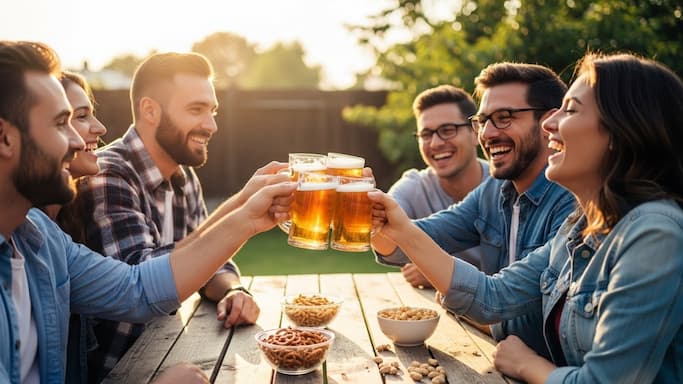



Think you know beer? You know what you like, sure. A cold lager on a hot day, a stout that tastes like a meal. But the story of this glorious beverage is weirder, wilder, and a whole lot more fun than you learned in school. We’re not talking about boring dates and dusty old brewers. We’re talking about beer being the reason we built civilizations, beer saving lives, and beer causing riots. So grab a pint, get comfortable, and let me hit you with some of the craziest, most mind blowing facts from the history of our favorite drink. This is the stuff they don’t teach you in history class.
1. Beer Might Be Older Than Bread
Let that sink in for a minute. Some of the smartest folks with beards and lab coats have a theory that our ancient ancestors, the ones still figuring out the whole “farming” thing, might have been making a crude, fermented grain gruel before they perfected the art of baking loaves. They were probably just trying to store grain, it got wet, wild yeast did its magic, and some curious caveman took a sip of the bubbly result. He liked what he tasted. The pursuit of a buzz could literally be one of the main reasons we stopped wandering around and started planting crops. We didn’t just discover beer. Beer might have discovered us.
2. The Pyramids Were Built on Beer Rations
Forget the whip cracking slave driver narrative. The best evidence suggests the thousands of workers who built the Great Pyramids in Egypt were actually paid laborers. And part of their daily wage was beer. A lot of it. We’re talking about a gallon or more per man, per day. This wasn’t just for getting hammered after work. In a time when water could be sketchy, beer was a safe, nutritious source of hydration and calories. It was literally liquid bread. So next time you look at a picture of those massive tombs, remember they’re a monument to human engineering, and also to the power of a good employee benefits package.
3. Medieval Monks Were the Ultimate Brew Bros
During the Middle Ages, while everyone else was drinking whatever murky swill they could find, monks in European monasteries were perfecting the art of brewing. They had the time, the resources, and the cleanliness standards to make consistently great beer. They also had a practical reason. During Lent, when they were supposed to fast from solid food, they argued that their rich, nutrient packed beer was “liquid bread” and therefore allowed. They’d basically do a beer fast for 40 days. Talk about dedication. We owe a huge debt to these holy men for preserving and advancing brewing knowledge while the rest of the world was falling apart.
4. IPAs Were Born from Sea Voyages, Not Hipster Trends
That super hoppy IPA you’re drinking has its roots in colonialism and long boat rides. When the British were shipping beer to their troops and colonists in India, the standard ales would spoil on the months long journey. Some clever brewer figured out that loading a beer up with a ton of hops, which are a natural preservative, would help it survive the trip. The high alcohol content and intense bitterness from all those hops acted as a shield against bacteria. The troops in India developed a taste for it, and a style was born. It wasn’t about being fancy. It was about making a beer that could cross an ocean without turning into vinegar.
5. There Was a “Beer Flood” in London
This sounds like the plot of a comedy movie, but it really happened. In 1814, a huge vat containing over 135,000 gallons of beer ruptured at the Horse Shoe Brewery in London. The force of the blast triggered a domino effect, breaking other vats and unleashing a tidal wave of porter that was 15 feet high. This boozy tsunami smashed into buildings, demolishing two homes and a pub. Eight people died, tragically drowning in beer. The aftermath was as chaotic as you’d imagine, with people reportedly scooping up free beer from the streets in any container they could find.
6. Prohibition Was a National Gut Punch
We all know Prohibition was a dumb idea. But we often forget just how devastating it was. Overnight, a huge industry was wiped out. Thousands of breweries were shuttered, never to reopen. Tens of thousands of people lost their jobs. The government lost a massive source of tax revenue. And what did we get in return? A thriving black market, organized crime, and bathtub gin that could blind you. It set American beer culture back decades. When Prohibition finally ended, only the biggest breweries had survived by making near beer or other products, which is a big reason why the post war beer landscape was so bland and homogenous for so long.
7. The Can Revolution Was a Game Changer
Before 1935, you bought your beer in bottles or from a keg. Then the Gottfried Krueger Brewing Company said, “What if we put it in a can?” It was a tough sell at first. People thought it would taste metallic. But cans were cheaper, lighter, and nearly indestructible. They made beer portable in a way it never had been before, perfect for fishing trips, picnics, and ball games. That little aluminum cylinder didn’t just change how we drank beer. It helped make beer a central part of American leisure and outdoor life.
8. The “Toast” is Older Than Dirt
Why do we clink glasses and say “cheers”? The tradition is ancient. One popular theory goes back to the Greeks and Romans, who were paranoid about assassination by poisoning. The host would take the first drink from the pitcher to show it was safe. Clinking glasses together supposedly caused some of each person’s drink to slosh into the other’s, a sort of “you drink what I drink” insurance policy. Another, simpler theory is that the clinking sound was thought to scare away evil spirits. Either way, it’s a tradition steeped in a mix of paranoia and superstition that we still carry on today without a second thought.
9. Beer Was Used as Currency
In ancient Mesopotamia, the workers who built the ziggurats weren’t paid in gold or silver. They were paid in beer. Their daily ration, called a “sila,” was their wage. This wasn’t some cheap stuff either. It was a vital part of their diet. In other cultures, taxes and tithes were often paid in beer. Think about that the next time you’re settling a bar tab. For a huge chunk of human history, beer wasn’t just a drink. It was money you could drink. That might be the best form of currency ever invented.
10. The First Video Ever Uploaded to YouTube Was About Beer
This one brings us into the modern era. On April 23, 2005, a guy named Jawed Karim stood in front of the elephant exhibit at the San Diego Zoo. The video is 18 seconds long. The title? “Me at the zoo.” And what does he talk about? The elephants have “really, really long trunks,” he says. “And that’s cool.” But the real kicker is his closing line, a perfect snapshot of the early internet’s weird, low stakes vibe: “Alright, so here we are in front of the elephants. And that’s pretty much all there is to say.” The first words spoken on the platform that would change the world were an awkward observation about elephants. It’s a beautifully simple, almost pointless moment that kicked off a revolution. It’s a reminder that sometimes, the most world changing ideas start not with a grand statement, but with a guy just figuring out how things work.
So there you have it. From the foundations of society to the foundation of your YouTube binge watching habits, beer has been there, bubbling away in the background. It’s been a wage, a meal, a cause of disaster, and a catalyst for innovation. It’s more than just a drink. It’s a thread running through the whole crazy tapestry of human history. Now go enjoy one. You’ve earned it.