



Let’s talk about money, but not in the boring way. We’re not gonna sit here with a spreadsheet, at least not yet. I want to talk about a mindset. It’s the difference between the guy who looks broke all the time and the guy who seems to have his stuff together, even if they make the same exact salary. It’s the gap between being cheap and being smart.
See, cheap is a reflex. It’s seeing a price tag and your brain screaming “TOO HIGH!” no matter what it is. It’s choosing the absolute rock-bottom option every single time, usually because it hurts your soul to part with a dollar. Being smart with money? That’s a strategy. It’s knowing when to spend a little more to save a lot later. It’s understanding that value isn’t just the number on the receipt, it’s what that thing does for your life, your time, and your future peace of mind.
The cheap guy buys the $20 boots that fall apart in six months and leak when it rains. The smart guy buys the $150 boots that are rebuilt, last for a decade, and keep his feet dry. The cheap guy sees the $150 and winces. The smart guy does the math: $20 every six months for ten years is $400, plus wet socks and aggravation. He sees the $150 as an investment in dry feet and not having to think about boots again until maybe 2035.
That’s the whole game right there. It’s not about having more money. It’s about making every dollar work harder, whether you’re spending it or saving it. Let’s break down where this shows up in a guy’s life.
Cheap Costs You More Later. Smart Costs You Less.
This is the core principle. Cheap is short-term thinking. Smart is long-term planning.
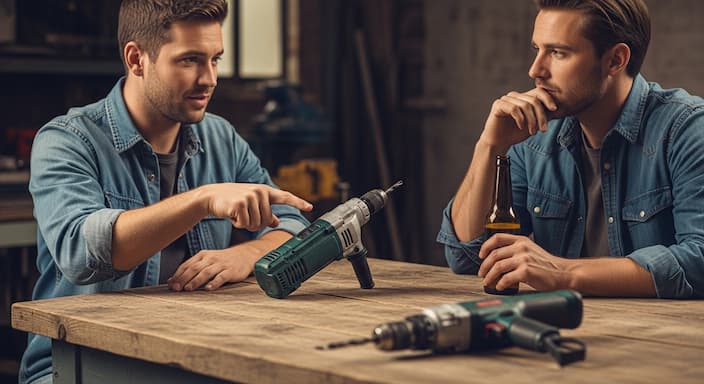
Think about tools. You’re putting together a shed. The cheap route is grabbing a flimsy drill from a bargain bin. It strips screws, the battery dies halfway through, and it finally gives up the ghost with one wall left to go. Now you’re making another trip, buying another drill, and wasting an afternoon. The smart move? Buying a solid, mid-range drill from a reputable brand. It gets the job done right the first time, and it’ll be there for the next hundred projects. The initial price is higher, but the cost-per-use plummets to almost nothing.
This applies to everything from tires for your truck to the mattress you sleep on. The cheap mattress might save you $500 now, but eight years of terrible sleep and a bad back will steal more from your life than money ever could. The smart purchase supports your health and your daily performance. It’s not an expense, it’s an upgrade to your primary equipment… you.
Time Is Money. Cheap People Waste It.
Here’s a big one. The cheap guy will drive 45 minutes across town to save $3 on a case of beer. Let’s do the quick math. An hour and a half of your time, plus gas and wear on your car, to save three bucks? That’s a terrible trade. Your time has value. A lot of value.
The smart guy values his time. He might pay for the convenience of the closer store, or better yet, he might buy in bulk so he makes fewer trips overall. He might pay a little extra for the express car wash so he gets an hour of his Saturday back. He’ll hire the neighborhood kid to mow the lawn so he can spend that time with his family, or working on a side project that actually makes him money.
Being smart means asking: “Is the money I’m saving worth the time I’m spending?” If the answer is no, you’re not being frugal, you’re being inefficient.
Cheap Shames. Smart Builds.
This is about the social side of money. The cheap guy is the one who always “forgets his wallet” when the check comes. He’ll nickel-and-dime his friends, split bills to the exact penny, and never buy a round. He might have a fat bank account, but he’s bankrupt in the friendship department. People notice. It builds a reputation you don’t want.
The smart guy is generous within his means. He buys a round when it’s his turn. He picks up the tab for a buddy’s lunch if he knows they’re going through a rough patch. He tips the bartender well because he knows it’s right and he’ll get better service next time. He understands that money is a tool for building a good life, and part of a good life is strong relationships. This isn’t about being a pushover, it’s about understanding that social capital is real capital. Being known as a stand-up guy who treats people fairly will open more doors and create more opportunities than hoarding every last cent ever will.
The Smart Guy’s Money Plays
So what does being smart actually look like in practice? It’s not just about buying nicer boots.
Investing in Knowledge
The cheap guy won’t spend $30 on a book or a course to learn a new skill. The smart guy knows that the right knowledge is the ultimate leverage. Learning how to change your own oil, handle basic home repairs, or understand how a Roth IRA works pays for itself a thousand times over.
Spending on Health
Good food, a gym membership you actually use, decent health insurance. These aren’t just bills. They’re the maintenance schedule for your body. Letting your health go to save a few bucks is the worst financial decision you can possibly make. The medical bills and lost income later will dwarf any savings now.
Automating the Boring Stuff
The smart guy sets up his money to work without him thinking about it. A percentage of his paycheck goes straight into a retirement account before he can touch it. His savings transfers happen automatically. He’s not relying on willpower, he’s built a system. This is the opposite of cheap. It’s paying your future self first, with zero effort.
The Bottom Line
Being cheap is driven by fear. Fear of not having enough. It’s a scarcity mindset that makes you small, stresses you out, and often leaves you with junk that breaks.
Being smart is driven by confidence and strategy. It’s an abundance mindset. It’s knowing that by making thoughtful choices today, you’re building a better tomorrow. You buy quality so you buy less often. You value your time so you can earn or enjoy more of it. You’re generous because you’re secure.
Start looking at your next purchase, big or small, through this lens. Ask yourself: “Am I being cheap, or am I being smart?” Is this saving me money now only to cost me more later? Is this wasting my time? Am I building something or just hoarding?
Make the smart move. Your wallet, and your future self cracking open a cold one on a porch you own free and clear, will thank you for it.