



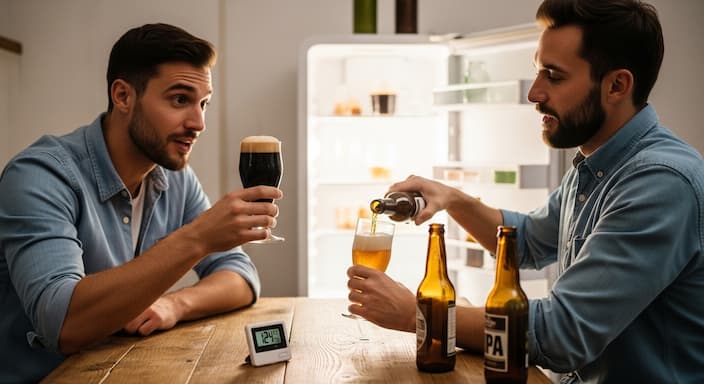
Alright, let’s settle a debate that’s probably older than the guy serving you a beer at your local dive. You know the one. Your buddy pulls a stout out of the fridge, cracks it open immediately, and takes a long pull. Meanwhile, some other guy… maybe a little too into his craft beer… is letting his IPA sit on the counter for fifteen minutes like it’s a bottle of fine wine. Who’s right?
The answer, as it turns out, is both of them. And neither of them. Because temperature isn’t just about personal preference. It’s chemistry. It’s biology. It’s the difference between tasting what the brewer actually made and tasting a frozen shadow of what that beer could be. We’re going to break down why that frosty mug might be ruining your buzz and why letting a beer warm up isn’t just hipster nonsense [citation:7].
The Science of Cold: Why Your Fridge Lies to You
Here’s the deal. Your taste buds are basically tiny temperature-sensitive instruments. When something ice cold hits them, they shut down. It’s a survival thing. Cold numbs the nerves, which is great if you’re drinking a light lager and just want something refreshing that doesn’t taste like much [citation:6]. But if you spent eight bucks on a can of something with actual flavor? You’re throwing money down the drain.
Recent research out of China actually mapped this out using nuclear magnetic resonance. Fancy stuff. They found that at lower temperatures, the molecular structure of beer changes. The chain-like structures that carry that boozy punch increase, giving you a sharper alcohol taste. At warmer temps, those structures fade and the beer feels smoother on the palate [citation:5]. So when your buddy says “it tastes better when it’s not so cold,” he’s not being difficult. He’s a damn scientist and didn’t even know it.
The Great Temperature Guide: What to Chill and What to Let Breathe
Let’s make this simple. You don’t need a beer sommelier certificate to figure this out. You just need to remember one thing: the darker and stronger the beer, the warmer it should be [citation:1].
The Ice Cold Zone (33-40°F)
This is where your light lagers and mass-market pilsners live. These beers were designed to be crushed on a hot day while you’re manning the grill. They’re not trying to be complex. They’re trying to be cold and wet. Keep them in the back of the fridge where it’s coldest. Serve them frosty. They’ll thank you by going down easy [citation:4].
The Sweet Spot (45-50°F)
This is where most of your craft beer lives. IPAs, pale ales, porters… these guys need a little warmth to wake up. Think of it like this. At fridge temperature, an IPA tastes bitter and that’s about it. Let it sit for ten minutes, and suddenly you get pine, citrus, maybe some tropical fruit. Those are the hop oils finally getting warm enough to evaporate into your nose, which is where most of your “taste” actually happens [citation:6][citation:9]. Pull these out of the fridge and let them rest while you’re pouring. You’ll thank me later.
The Cellar Temp (50-55°F)
This is stout country. Imperial stouts, barleywines, Belgian quads… these heavy hitters need the most warmth. At these temps, that boozy heat integrates into the beer instead of smacking you in the face. Those chocolate and coffee notes open up. The beer gets creamy instead of sharp. If you’ve ever had a stout straight from the fridge and thought “this is fine but I don’t get the hype,” warm one up to cellar temp and try again [citation:4][citation:7]. It’s a different beer entirely.
The British Pub Lesson
You know why British pubs serve “warm” beer? It’s not because they don’t understand refrigeration. It’s because their traditional ales were brewed to be served at cellar temperature… around 50-55 degrees… long before refrigeration existed [citation:4]. Those recipes are built around that serving temp. When American GIs came through during World War II, they thought the beer was warm because they were used to ice-cold lagers back home. But the Brits weren’t wrong. They were just playing a different game with different rules [citation:4].
Those traditional English bitters and milds? At cellar temp, they’re malty, complex, and dangerously drinkable. Chilled down, they lose all that character and just taste like watery brown beer. Don’t make that mistake.
The Practical Guide: How to Actually Do This
Look, I’m not expecting you to carry a thermometer to the bar. That’s insane. But here are some practical moves you can make starting tonight.
The Ten Minute Rule
Most home fridges sit around 35-38°F. That’s too cold for anything that isn’t a light lager. So when you grab a stout or an IPA, set it on the counter while you grab your glass and get situated. Ten minutes. That’s all it takes to bring it up into the flavor zone [citation:7].
Glassware Matters
Never drink a good beer straight from the bottle or can. I know, I know. It’s convenient. But you’re missing half the experience. A glass lets those aromatics concentrate above the liquid where your nose can find them. And if that glass is room temperature instead of straight from the freezer? Even better. You want the beer to warm naturally, not get shocked by a frozen glass [citation:9].
Trust Your Hands
Here’s a trick. Hold the glass in your palms for a minute. Feel how the beer warms where your hands are. Take a sip from that side, then from the cold side. Notice the difference? That’s the lesson. Your hands are teaching you what temperature works for that specific beer [citation:9].
The Exceptions That Prove the Rule
Now, before you go pulling every beer out of the fridge and letting it sit, remember why cold exists. Carbonation hits harder at lower temps [citation:10]. That fizz and tingle that makes a beer feel refreshing? That’s a cold beer thing. So if you’re drinking a lawnmower beer after mowing said lawn, keep it frosty. That’s its job. But if you’re sitting around a fire pit actually tasting what’s in your glass, give it some warmth and see what happens [citation:7].
The Bottom Line
Here’s where we land. Temperature isn’t about rules. It’s about results. The only question that matters is “does this taste better?” And the answer changes based on the beer, the situation, and your own damn taste buds. Some guys are born with more sensitive palates than others… science calls them “thermal tasters”… and they’ll notice temperature differences more than the rest of us [citation:10]. But everyone can benefit from a little experimentation.
So tonight, grab two of the same beer. Drink one straight from the fridge. Let the other sit for fifteen minutes. Compare them. Actually pay attention. You might discover that everything you thought you knew about your favorite beer was filtered through a layer of frost that was hiding the good stuff. And if you don’t notice a difference? No worries. You just drank two beers. That’s a win either way