



Okay, let’s get real for a minute. We get a lot of talk about money. Save more. Invest. Cut out the avocado toast. Blah, blah, blah. It’s all about what you shouldn’t do with your cash. But here’s the part they skip: you also have to spend it. That’s kinda the whole point of earning it, right? The goal isn’t to die with the biggest number in your bank account. The goal is to live a good life, on your terms, without constantly feeling like you got ripped off or made a stupid decision you’re still paying for.
We’ve all been there. That sinking feeling in your gut two days after a big purchase. Staring at a credit card statement for some gadget you never use. Realizing you blew three hundred bucks on a night out you can barely remember. That’s regret. It’s a financial hangover, and it’s worse than the one from cheap tequila. So how do you avoid it? How do you actually spend your hard-earned money in a way that makes you feel good, not guilty? It’s not about being cheap. It’s about being smart and intentional. Let’s break it down.
The 24-Hour Cool-Off Rule (Your Best Defense)
This is the single most powerful tool in your arsenal, and it costs you nothing. The rule is simple: for any non-essential purchase over a certain amount, you impose a mandatory 24-hour waiting period. That amount is different for everyone. Maybe it’s $100. Maybe it’s $500. You pick the line.
You see the new power tool, the fancy jacket, the latest gaming console. You want it. Instead of hitting “buy now,” you walk away. You sleep on it. The magic of this pause is that it separates the impulse from the intention. The flashy marketing, the “limited time offer,” the dopamine hit of a new thing… it all fades after a day. What’s left is your actual desire for the item. Nine times out of ten, you’ll wake up and realize you don’t really need it, or you can find it cheaper, or you’d rather save the money for something else. If, after 24 hours, you’re still genuinely excited about it, then go for it. You’ve just eliminated 90% of your spending regret with one simple move. Think of it as a spam filter for your wallet.
Buy the Tool, Not the Trophy
This is a mindset shift that changes everything. A lot of regretful spending happens when we buy things for status, to impress other people, or to fill some vague emotional hole. That’s buying a trophy. It looks nice on the shelf, but it doesn’t do anything.
Instead, focus on buying tools. A tool solves a problem. A tool enhances your life. A tool gets used. That giant, expensive TV is a trophy if you just want people to say “wow.” It’s a tool if you genuinely host football Sundays every week and your family loves movie nights. The top-of-the-line barbecue grill is a trophy if you cook hot dogs twice a summer. It’s a tool if you’re out there every weekend perfecting your brisket, feeding friends, and enjoying the craft. When you evaluate a purchase, ask yourself: “Is this a tool for my life, or just a trophy for my ego?” Tools rarely bring regret. Trophies collect dust and resentment.
Spend on Experiences You’ll Remember, Not Stuff You’ll Store
Science backs this up, and so does common sense. Think back on the last five years. What brings a bigger smile to your face: the memory of that expensive watch, or the memory of that camping trip with your buddies where everything went wrong but you laughed the whole time? Exactly.
Stuff depreciates. It breaks. It goes out of style. Experiences appreciate in your memory. They become stories. They strengthen relationships. I’m not saying never buy anything nice. But if you have to choose between a newer car payment and a family vacation, lean toward the vacation. The car will be a hunk of metal in a junkyard in 15 years. Your kids will remember that trip for the rest of their lives. Prioritize spending that creates memories, not just clutter. That’s money that pays dividends in happiness, not regret.
Pay with Cash for the Fun Stuff
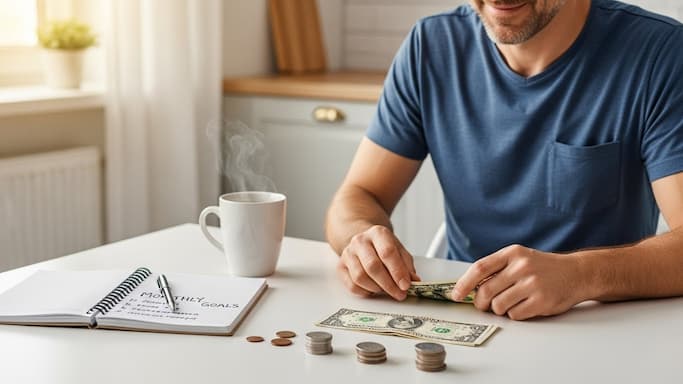
This is an old-school trick that works like a charm for discretionary spending. Your “fun money” for the month, be it for nights out, hobby gear, or random treats, should come out in cash. When the cash is gone, you’re done. Using a card, especially a credit card, is like playing with Monopoly money. It doesn’t feel real. You tap, you swipe, you sign… the pain of parting with it is delayed and diluted.
Pulling five twenties out of your wallet for a nice dinner with your lady, however, feels real. You see the money leave. You have to count it out. It creates a tangible connection between the pleasure of the experience and the cost. This simple act makes you more mindful, makes you value the experience more, and puts a natural, physical limit on your spending. You’ll find you get more enjoyment out of less money because you’re fully present for it, not just racking up a bill for Future You to worry about.
Fix the Roof Before It Rains (Preventative Spending)
This one isn’t sexy, but it saves you a ton of regret and a mountain of cash down the line. Preventative spending is buying quality so you don’t have to buy twice. It’s getting the oil change on time so you don’t need a new engine. It’s replacing the worn tires before you have a blowout on the highway. It’s buying the good pair of boots that last ten years instead of the cheap pair you replace every season.
We often see these necessary, quality purchases as a drag. “Ugh, I have to spend $800 on new tires.” Flip the script. That $800 is buying you safety, peace of mind, and avoiding a $2000 tow and repair bill later. That’s a win. Viewing essential maintenance and quality goods as smart investments, not annoying costs, takes the sting out. The regret isn’t in spending the money, it’s in not spending it and paying the price later.
The Final Tally: Did It Add Value?
At the end of the day, spending without regret comes down to one simple question, asked before you pull the trigger: “Will this genuinely add value to my life?”
Value can mean a lot of things. It can be utility (a tool that saves me time). It can be joy (an experience with people I love). It can be peace (preventative maintenance). It can be supporting a buddy’s small business. If the answer is a clear, honest “yes,” then spend with confidence. Crack a beer and enjoy your purchase. If the answer is fuzzy, or if it’s really “I want to look cool,” or “I’m bored,” then put your wallet away. Your future self, the one who isn’t stressed about bills and has the cash to do the things he really wants, will thank you. Money’s a tool. Spend it like one.