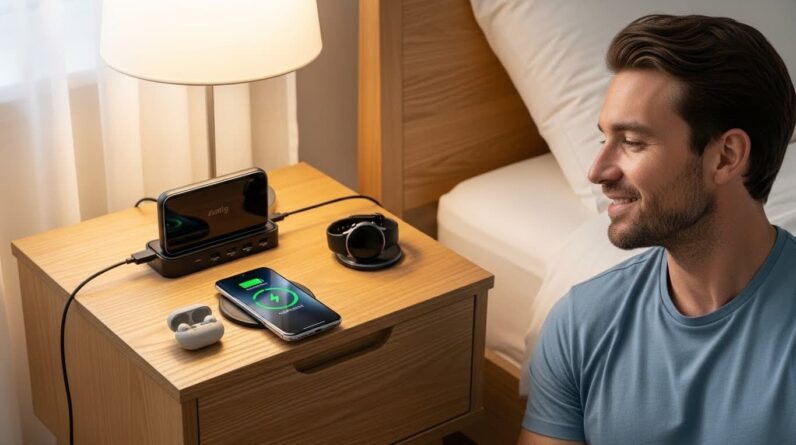



Let’s have a real talk about the shiny stuff. You’ve seen the ads. They’re everywhere. The gadget that promises to revolutionize your morning. The app that swears it’ll organize your entire life. The smart home gizmo that basically hints you’re a caveman if you don’t own it. Every single day, a new piece of tech is screaming for your attention, and more importantly, your wallet. It’s easy to feel like you’re falling behind, like you need to keep up with the Joneses who have a fridge that can order its own milk. But here’s the secret they don’t want you to know: a whole lot of that tech is complete garbage. It’s overpriced, overcomplicated, and solves a problem you never even had. Let’s break down why you need to be the guy who thinks twice, not the guy who just clicks “buy now.”
The Golden Rule: Tech Should Serve You, Not the Other Way Around
This is the bedrock principle. Any piece of technology you bring into your life should make it easier, better, or more fun. It should be a tool. The minute it becomes a chore, a source of frustration, or a thing you have to constantly babysit, you’ve lost. Think about it like a good power tool. A solid drill lets you hang a shelf in ten minutes. You use it, you put it away, life is better. Now think about a “smart” coffee maker with a broken app that requires a software update before you can get your caffeine fix. That’s not a tool. That’s a hostage situation happening on your kitchen counter. The best tech is almost invisible. It just works. If you find yourself watching more YouTube tutorials than actually using the thing, you bought a liability, not an asset.
The Big Tech Traps to Avoid
The “Solution” in Search of a Problem
This is the king of useless tech. These are products created because they could be, not because they should be. Do you need a Bluetooth-connected water bottle that tracks your sips and scolds you via your phone? No. You need to drink some water. Do you need a $400 “smart” mirror that shows you the weather while you brush your teeth? Your phone in your pocket already does that, and it doesn’t fog up. These gadgets add layers of complexity to the simplest tasks. They create new problems—dead batteries, failed connections, privacy concerns—where none existed before. Before you buy anything, ask yourself the blunt question: “What does this actually do for me that I can’t do just as well, or better, with what I already have?” If the answer is “look kinda cool for a week,” save your money.
The Upgrade Treadmill (And Planned Obsolescence)
They’ve got you running in a hamster wheel, and they’re selling you new, fancier wheels every year. This is most obvious with phones. Is this year’s model really that much better than last year’s? For 99% of people, no. You text, you check scores, you take pictures of your dog and your barbecue. A phone from three years ago does all that perfectly fine. But the tech giants pour billions into marketing to make you feel outdated. It’s a manufactured need. Even worse is when they slow down your old device with updates, a shady practice that’s basically a forced retirement party for your perfectly good gadget. Don’t play their game. Run your tech into the ground. Use it until it literally cannot function anymore. That’s how you win.
The Privacy Tax
Here’s a fun little cost they never put on the price tag. That dirt-cheap smart speaker or that free fitness app? You’re not the customer. You’re the product. Your data—your voice recordings, your daily routines, your location, your habits—is what they’re really selling. You’re inviting a corporate surveillance device into your home for the privilege of asking it to play 80s hair metal. Is the convenience of yelling at a cylinder to set a timer really worth it? For some guys, maybe. But you need to go in with your eyes wide open. If you aren’t paying for it, you and your information are what’s being sold. Sometimes, the dumb version of something—a regular light switch, a basic thermostat—is the smarter choice because it respects the one thing you can’t get back: your privacy.
Feature Bloat and Complexity for Its Own Sake
Modern tech is suffering from a serious case of “more-itis.” Software, apps, even cars are packed with a thousand features you’ll never use. Your TV remote needs a manual. Your car’s dashboard looks like the cockpit of a spaceship. This isn’t progress. It’s noise. It’s confusion disguised as capability. A great product does a few things incredibly well. A bad product does a hundred things poorly. When you’re looking at a new gadget, ignore the mile-long list of specs and flashy buzzwords. Ask: “Is the core thing it’s supposed to do, done simply and reliably?” A grill with one perfect knob for heat is better than a “smart” grill with a buggy app and a motor that’s guaranteed to break.
The Tech That’s Actually Worth Your Dime
So, what should you actually spend money on? The stuff that provides genuine value. Here’s the good stuff.
The Home Theater for the Big Game. This is hallowed ground. Investing in a great TV, a solid soundbar, and a reliable streaming device pays you back every single weekend. It turns your living room into the best sports bar in town[citation:1]. No overpriced beers, no fighting for a table. This tech has one job: deliver an awesome viewing experience. It does it well, and it does it for years. That’s a win.
Tools That Are Actually Tools. A quality cordless drill. A robust battery-powered leaf blower. A vacuum robot that actually picks up pet hair without getting stuck every five minutes. These things give you time and sanity back. They help you maintain your castle without wasting your entire Saturday. This is tech as a force multiplier for your own effort.
Simple, Dumb Reliability. Never underestimate the power of something that just works, every time, without a thought. A classic wristwatch. A cast iron skillet. A well-made pair of boots. In a world of fragile, fussy gadgets, the old-school, non-digital stuff often provides the most satisfaction and the longest service. Sometimes, the best tech is no tech at all.
The Bottom Line: Be a Skeptic, Not a Sucker
The goal isn’t to live in a cave. It’s to be intentional. The next time you see a shiny new thing, pause. Apply the filters. Does it solve a real problem I have? Is it built to last, or is it designed to break? What’s the real cost, not just in dollars, but in my time, my attention, and my privacy? The most powerful piece of tech you own isn’t in your pocket. It’s between your ears. Use it. Think for yourself. Your wallet, and your sanity, will thank you. Now, if you’ll excuse me, I’m going to go use my “dumb” grill to make some dinner. The only interface it has is a knob, and the only data it collects is the perfect sear on a steak.